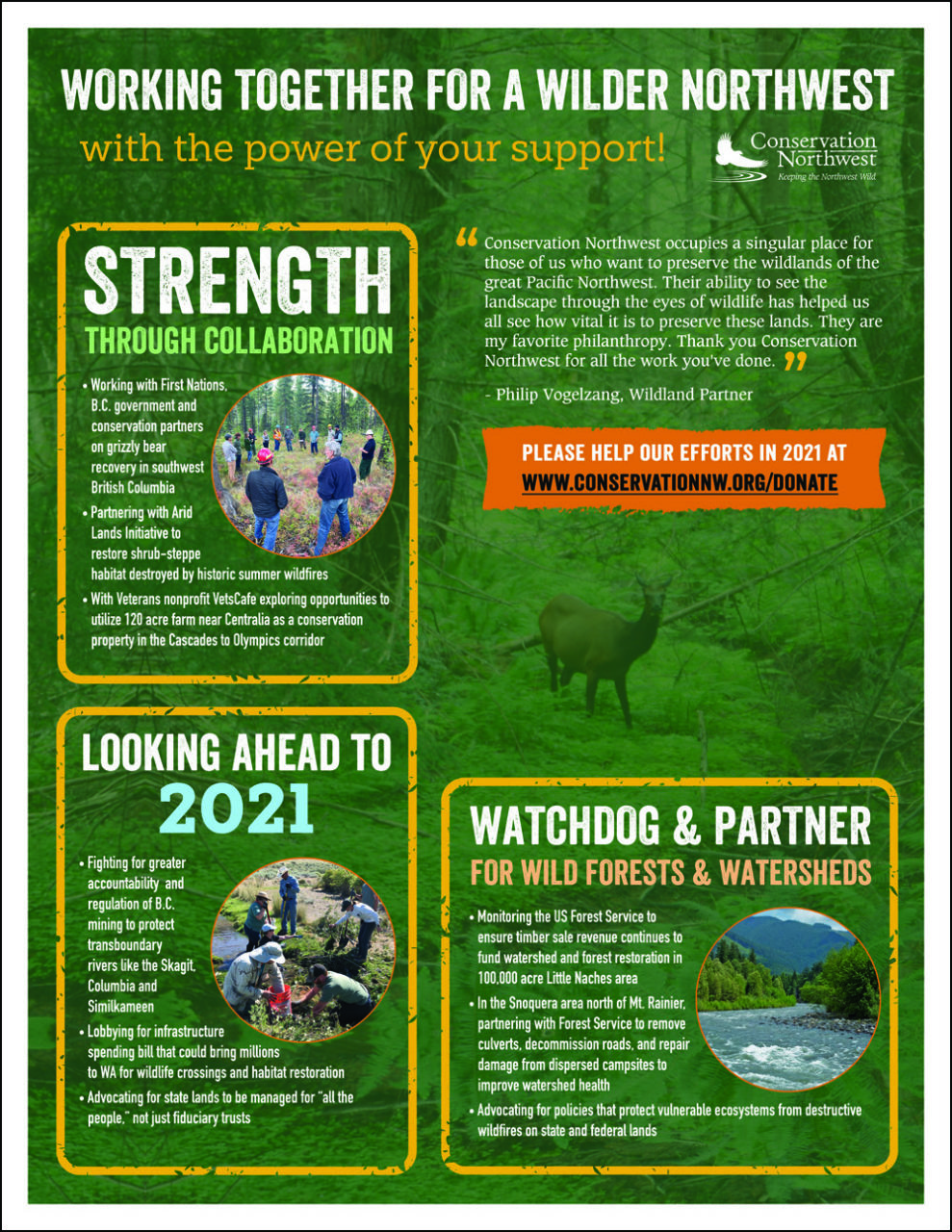

In a year of historic adversity, we forged ahead. Help us accomplish more for a wilder Northwest in 2021!
By Mitch Friedman, Executive Director
Wow. 2020 has been quite the wild year, hasn’t it? A global pandemic, historic wildfires, hurricanes and glacial melt–harbingers of rapid climate change, the largest protests for racial justice since the 1960s, and another acrimonious presidential election. Through it all I’ve been moved by the incredible support from so many of you who have stuck with us during trying times.
I’ve also been inspired by the resolve of our amazing staff, who despite epic disruptions and uncertainties, have forged ahead with some impressive gains for Northwest wildlife and wildlands.
While we hope events will calm, we still face a challenging year ahead; one that also comes with ample opportunities. That’s why I hope you’ll make a year-end gift today to help launch us into 2021.
As usual, there’s too much good stuff to report on in a single two-page letter.
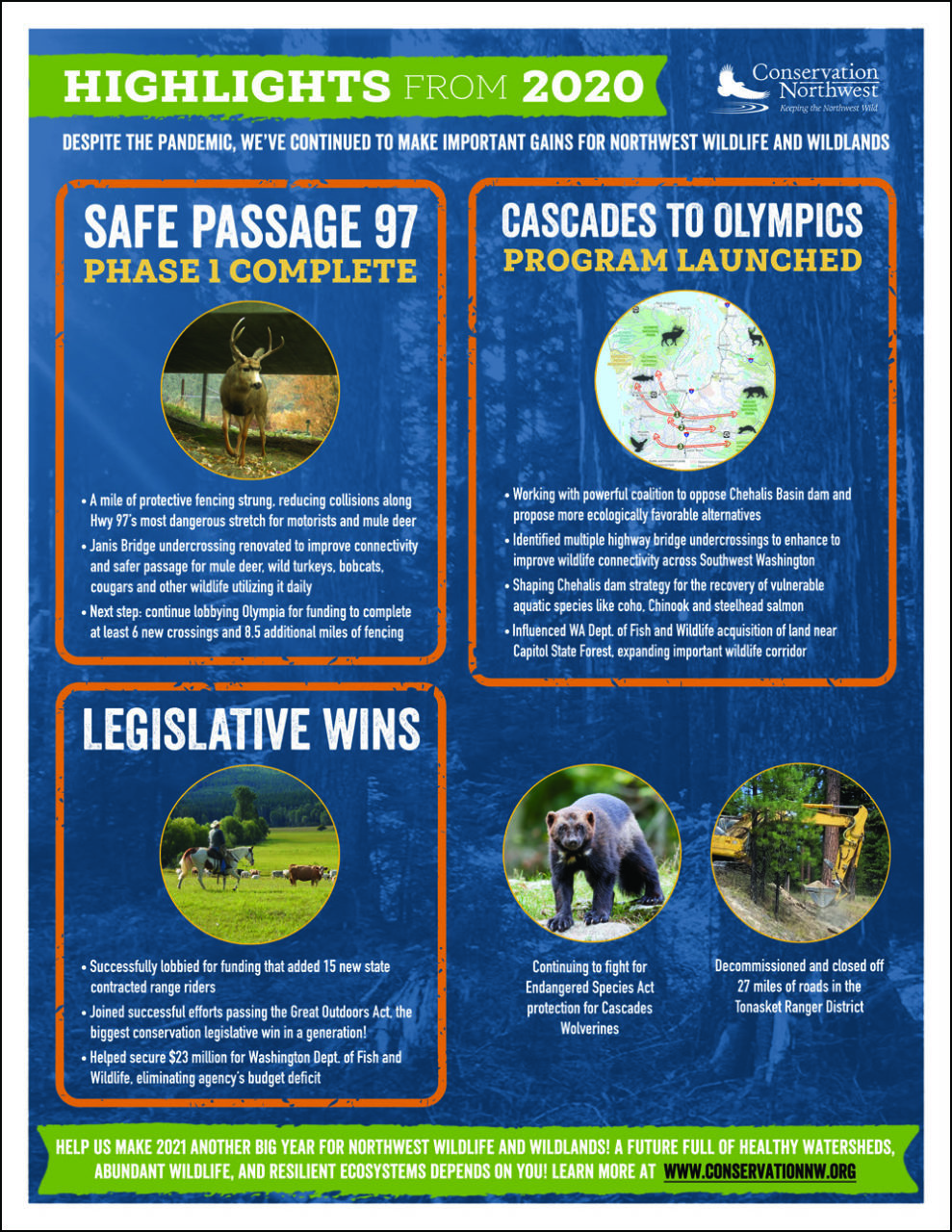
For starters, one project I’m especially proud of is on Highway 97 near Omak, where we’ve completed Phase One of our Safe Passage 97 work. With a mile of protective fencing strung and the wildlife crossing under Janis Bridge fully renovated, we’re already seeing the benefits as mule deer, bobcats, turkeys and other wildlife utilize the crossing daily to move under the highway, and far fewer vehicle collisions with deer occur now that they’re remaining safely out of harm’s way.

On the wet side of the state, I’m thrilled by the launch of our Cascades to Olympics program, where we’re working on an ambitious, landscape-level scale (the way we like it!) connecting two of our state’s great mountain ecosystems.
As part of a powerful coalition including the Quinault Nation, Chehalis Tribe and other local groups, we scored an early win when Governor Inslee came out against a proposed dam on the Chehalis River. While the dam idea isn’t dead yet, this moves us closer to a solution that won’t prove disastrous for aquatic species like coho salmon and hundreds of acres of prime forest habitat.

Meanwhile we’ve identified places where our work can directly help wildlife that must cross I-5 and two state highways. These opportunities offer big payoff just by removing thick brush from beneath bridges, making these spaces traversable for wildlife like deer, elk and black bears. This is a key early step in our strategy to improve connectivity across southwest Washington’s vast and increasingly developed landscape.
Our new Forest Field staffer, Michael Liu, previously the Forest Service district ranger for the Methow Valley, has gotten right to work monitoring forest restoration projects like the Mission Project south of Twisp, working with the DNR to reduce wildfire risks in state forests, and protecting riparian areas near Tonasket.
In the Central Cascades, our field staffer Laurel Baum is fully engaged in the Forest Service’s Snoquera Project north of Mount Rainier with efforts to remove old culverts for better fish passage, decommission roads to improve watershed health, and restore degraded forestland back to historic wild-forest conditions.
In northeast Washington wolf country, our Jay Shepherd continues the often thankless but essential work of keeping the peace between wolves and livestock. Jay oversees a small army of 15-20 range riders. Their efforts are paying off as so far we’ve seen virtually no wolf conflict where these riders have deployed. At over 145, Washington’s wolf count is at an all-time high since recovery began a decade ago.